
Why Do We Call Software Problems as Bugs?

Ever wondered why we call software issues as bugs? Last week, at my school, instead of paying attention to my computer teacher, I started wondering why people use the word ‘bug’ instead of ‘issues’ or ‘problems’.
At lunch break, I went to the library and found an interesting story on that. Turns out, one of the very first generations of electromechanical computers called as the Harvard Mark II had errors in it due to the presence of an actual bug (a moth) stuck inside one of its electromagnetic relays.
As the machine operated with relays turning on and off, the warm environment eventually started attracting moths. Grace Hopper, a computer scientist who worked on the machine, came to know about that poor trapped moth. She then pasted it on her log book with a note — ‘First case of bug being found’.
August 2009 — update: Wikipedia is awesome. Someone uploaded a picture of that log book page. Here it is.
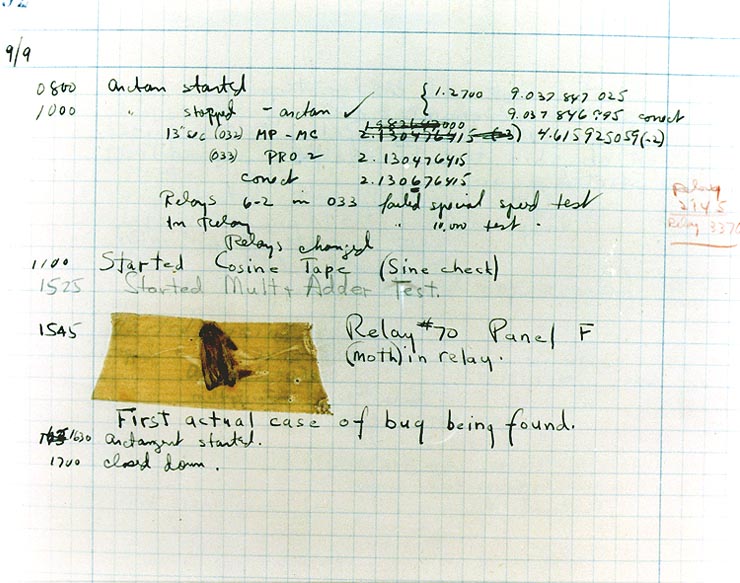
Though this incident popularized the term ‘bug’, it was already in the used as an engineering jargon since the days Thomas Edison. I bet that the engineer who called the moth as a ‘bug’ actually knew that.
Now back to my computer class. I already know about that lesson on Visual Basic and I really didn’t want to listen to it. Mayilswamy sir wouldn’t care about me not paying attention too, as he already knew I have read the book cover to cover when the term started. He is awesome! But I wish I had friends in my class who are really into computers. :/
First published Jul 19, 2005.
We totally get why you have an ad blocker. If you enjoy reading Geekswipe, turning it off for us helps keep the site alive and the science coming.

Aeronautical engineer, product builder, developer, science fiction author, and an explorer. I'm the creator and editor of Geekswipe. I love writing about physics, aerospace, astronomy, and technology.
More by Karthikeyan KC

![Squishy Bird Online – The Best Way to Quit [Kill] Flappy Bird](https://geekswipe.net/wp-content/uploads/2014/02/Squishy_Bird_Geekswipe_Res_1-800x450.jpg)