Can You Trap Light?

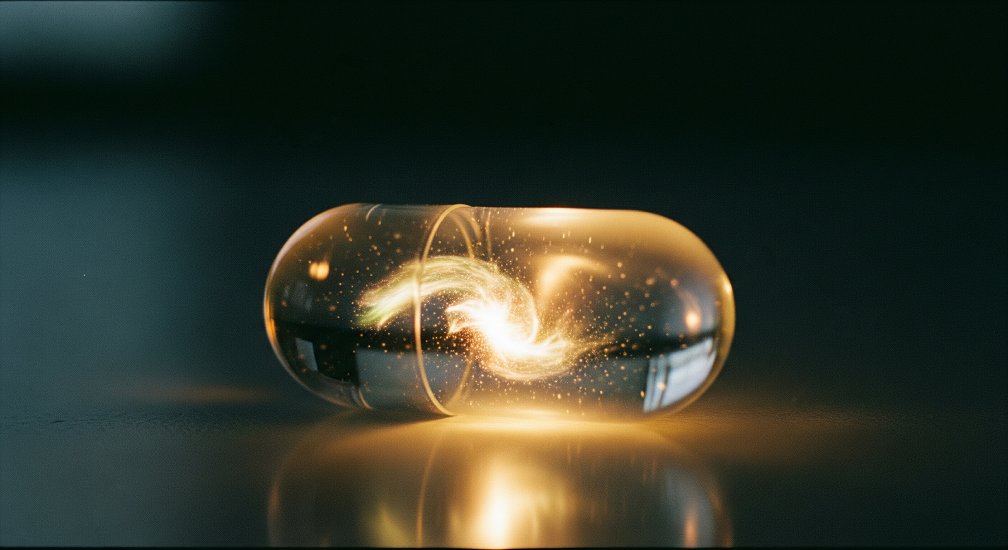
Light is the fastest thing we know. It zips through space at about 300,000 kilometers per second, bouncing off mirrors, slipping through glass, bending in water, and performing many tricks. And if you shine a flashlight in the dark, the beam just races away. Have you ever wondered if we can actually trap that light? Can you put something that fast and slippery in a box and make it stay?
The answer is yes. Let’s dive deeper!
What does trapping really mean?
Think of light as waves of electromagnetic energy. Normally, those waves spread outward forever. To “trap” light means keeping those ripples bouncing around in a controlled space instead of letting them escape.
It’s not like grabbing a tennis ball. You can’t just “hold” a photon. But we can build clever systems that force light to hang around. Sometimes for nanoseconds, sometimes for seconds, and in some experiments, almost indefinitely.
So how can we trap light?
Mirrors, but better (aka Optical Cavities)
The simplest trap is just mirrors. Imagine two super-polished mirrors facing each other, perfectly aligned. A photon bounces back and forth between them like a pinball.
This setup is called an optical cavity or Fabry–Pérot resonator. Lasers rely on this trick. The light inside keeps reflecting, building up intensity until it bursts out in a coherent beam.
But here’s the catch. Even the best mirrors leak a little. And light … Well, it finds a way out.
The whirlpool trap
Now imagine rolling a marble inside a glass bowl. Instead of escaping, it circles around the rim again and again. Light can do this too.
In a tiny glass bead or a micro-ring made of silicon, photons can run laps inside by total internal reflection. These are called whispering gallery modes (named after how sound behaves in round rooms like St. Paul’s Cathedral).
Here, light can circle millions of times before leaking out. Think of it like keeping a supersonic jet flying loops inside a bowl.
Slowing light
What if instead of bouncing it around, you slow light down so much it barely moves?
In 1999, physicists at Harvard and the Rowland Institute did exactly that. By firing lasers into an ultracold (cooled to almost absolute zero) cloud of sodium atoms, they slowed light pulses from 300,000 km/s to just 17 meters per second. In later experiments, they even stopped light entirely for fractions of a second, storing the pulse as an imprint in the atoms.
Sucking with an artificial black hole
Scientists have built materials (metamaterials) that bend light so strongly it can’t escape, similar to a black hole. By carefully arranging them, researchers create artificial event horizons where light spirals inward and gets absorbed.
It’s not a “box” for photons but a one-way street. Where light checks in but never checks out.
So yeah. We can trap light.
Trapping light isn’t about locking it in a box. It’s about learning to engineer time itself. By holding onto photons, even briefly, we bend the rules of how information, energy, and communication can flow.
First published Sep 1, 2025.
We totally get why you have an ad blocker. If you enjoy reading Geekswipe, turning it off for us helps keep the site alive and the science coming.
We're a clique of geeks, nerds, professionals who co-exist peacefully at Geekswipe, writing on science, technology, culture, and answering your curious questions.
More by Geekswipe Team