
Do Trees Die of Old Age or Just from Disease and Gravity?

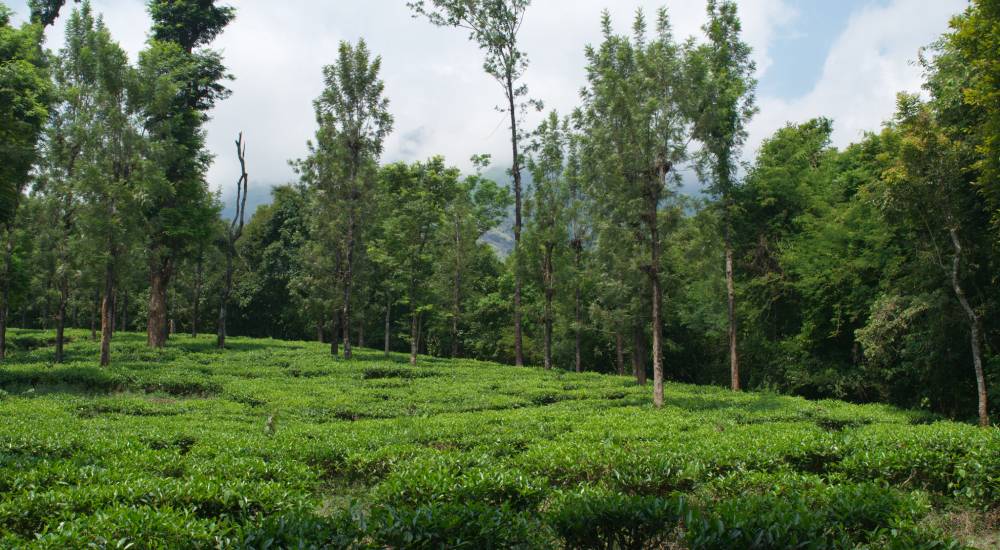
We humans have a pathetic habit of projecting our own biological flaws onto everything else in the universe. Because our DNA is essentially a ticking biological clock, (where our telomeres fray, our cells get tired, and we eventually shut down from old age) we just assume the rest of the natural world operates on the same depressing schedule.
Well, that’s where things get humbling and wrong.
So when we look at a massive, rotting oak tree finally collapsing in the woods, we say, “Aw, it died of old age.”
Trees don’t die of old age. In fact, on a cellular level, many trees are functionally immortal. They suffer (?) from a phenomenon biologists call negligible senescence. In other words it means some trees and animals don’t have a programmed biological expiration date. A 5,000-year-old Bristlecone pine doesn’t have “old” cells. The meristematic tissue (the plant equivalent of stem cells that generates new growth) in a millennia-old tree is just as vibrant, youthful, and capable of dividing as the tissue in a two-year-old sapling.
If their cells don’t age out, why aren’t our forests filled with towering, immortal skyscrapers of wood?
Because trees aren’t gracefully passing away in their sleep. They are fighting a brutal, centuries-long war of attrition against physics, geometry, and parasites. And eventually, they lose.
How do you suck water up a 300-foot straw?
To understand how a tree dies, you have to understand what a tree actually is. A tree is not a solid block of life. It’s essentially a dead wooden skeleton wrapped in a millimeter-thin layer of living tissue (the cambium), which is constantly building more dead skeleton to prop itself up. Think of it like a biological mech suit (sounds cool, yeah?).
And as this mech suit gets taller and wider, it runs headfirst into a massive engineering nightmare – fluid dynamics.
Trees don’t have hearts. To get water from the roots to the leaves, sometimes 300 feet in the air, they rely on transpiration. As water evaporates from the leaves, it creates negative pressure, pulling more water up through the xylem (the tree’s microscopic plumbing).
Imagine trying to suck a thick milkshake up a straw that is three hundred feet long. The physics required to maintain that water column are staggering. As the tree gets taller, gravity fights back harder. Eventually, the tension gets so extreme that the water column actually snaps. Air bubbles form (from cavitation) and the plumbing gets blocked. The top of the tree literally cannot pump water high enough anymore, and the crown starts to die back. The tree isn’t old but it has simply reached the absolute physical limit of hydraulic engineering on Earth.
How does a tree starve from its own success?
Then there’s the metabolic tax.
As a tree gets wider, its circumference expands exponentially. That means the thin layer of living tissue, that cambium layer that needs constant energy to stay alive, gets massively larger every single year.
But the tree’s leaves (the solar panels generating the food) can only expand so much before they are constrained by the canopy of other trees or the limits of the branches.
Let’s do a quick math! The energy demand of the living tissue is increasing exponentially, but the energy supply from the leaves is plateauing. Eventually, the tree reaches a tipping point where it is spending 99% of its energy just trying to keep the lights on. It has no surplus calories left to heal wounds, fight off infections, or produce defensive chemicals. So ultimately, it begins to starve from its own massive success.
Who actually delivers the killing blow?
This is when the real killers show up. A tree operating on razor-thin energy margins is a sitting duck.
A healthy tree can literally drown an invading bark beetle in toxic, sticky resin. But a massive, mechanically stressed tree? It doesn’t have the energy to manufacture that resin. The beetles bore in. They carry fungal spores with them. The fungus rots the heartwood, hollowing out the structural integrity of the trunk.
Then, when a perfectly average winter storm rolls through. A fast enough gust of wind hits a canopy that weighs ten tonnes, and the hollowed-out base just shatters.
Gravity finishes the job!
So, what’s the real takeaway here?
So no, trees don’t get tired. They don’t have a quiet, dignified golden age.
They are architectural marvels that grow until their sheer mass breaks the laws of thermodynamics and fluid dynamics, making them vulnerable to microscopic scavengers and wind. They are cursed by their own infinite growth glitch.
Next time you see a giant fallen tree, don’t think of it as an old man who finally passed on. Think of it as a battleship that held the line against gravity and rot for a thousand years before finally being breached.
It’s metal as hell.
First published May 3, 2024.
We totally get why you have an ad blocker. If you enjoy reading Geekswipe, turning it off for us helps keep the site alive and the science coming.

Aeronautical engineer, product builder, developer, science fiction author, and an explorer. I'm the creator and editor of Geekswipe. I love writing about physics, aerospace, astronomy, and technology.
More by Karthikeyan KC


Interesting. There are also some accelerators. When a tree is starved they also emit high frequency acoustic sounds from cavitation insides the xylem. Some insects use these sounds like a passive acoustic beacon to navigate toward compromised water-stressed tissues within a tree.