
Why Do We Laugh When We Are Tickled?

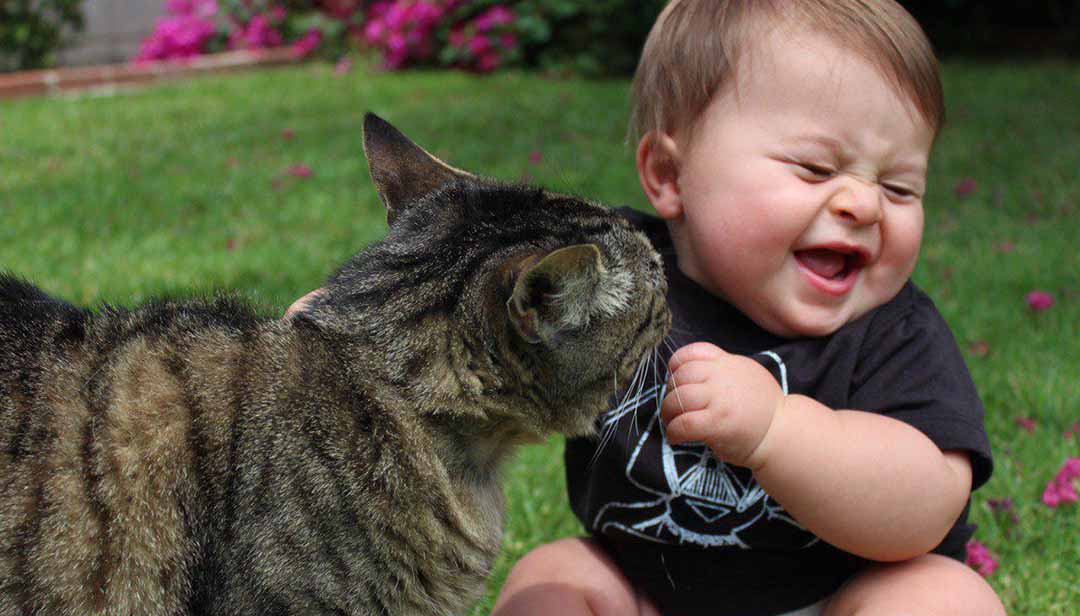
Before delving deep into the laughter part of the tickle, let us scratch the surface of the word ‘tickle’ first. Tickling can be stimulated in two different ways. A very light and subtle touch or movement on your skin that causes an itchy tickle without laughter and a heavy tickle that stimulates laughter, goose bumps and tears. Sometimes, you might turn into an angry beast soon when someone tickles you forever. So it is clear that the sensation is somehow linked with emotion. And now, for our curious minds, we shall jump deep inside the physiology of tickling and explore why tickling is a serious stuff and what causes the emotional responses like laughter and pain.
Physiology
Tickling involves the [su_tooltip style=”light” position=”north” title=”Sensory Cortex” content=”The sensory cortex can refer informally to the primary somatosensory cortex, or it can be used as an umbrella term for the primary and secondary cortices of the different senses. The somatosensory cortex is involved in somatic sensation, visual stimuli, and movement planning.”]somatosensory cortex[/su_tooltip], which senses the touch, and also involves the nerves that are associated with pain. When someone tickles or touches your tickle spots, the somatosensory cortex senses the touch and as this somatosensory stimulus (tickling) is also mediated by anterior cingulate cortex (the part of the brain that senses pleasant information), you laugh. The level of tickling decides if you want to stay laughing or if you want to turn into a monster and bite them back.
Why can’t you tickle yourself?
The reason why we can’t tickle ourselves is that the human body ignores the stimulus from us often. This is called sensory attenuation. Or in other words, the brain voluntarily attenuates the sensations created by your own actions, to focus more on the external stimulus. When you try to tickle yourself, your brain actually knows your limb movements and it anticipates the touch. This lowers the activity of the two regions, somatosensory cortex and anterior cingulate cortex, and hence no laughter or ticklish feel.
The findings from self-tickling studies and the research on tickling itself are widely helpful in schizophrenic researches, as the sense of self-touch in a schizophrenic is different from a normal person. This helps us to understand schizophrenia better.
Tickling might be a social phenomenon
Though tickling seems easy to comprehend, a few things cannot be explained yet. There are hypotheses that outlay different explanations for the ticklish feel. A few psychologists suggest that tickling is more of a parent – child bonding technique that lets one’s parent touch the child to induce pleasant feelings and thereby strengthening the bond. It is also suggested that tickling might be a technique for humans and primates to protect themselves, as the ticklish areas are mostly vulnerable than the others. For example, our armpits and neck are ticklish and vulnerable at the same time. So when someone tickles those areas, our body automatically tends to bend and we eventually try to get rid of them. Tickling is also considered as a vestige reflex from our ancestors who used these techniques to train oneself in a hand-to-hand combat.
There are people who are crazily immune to tickle and poor people like me who would shoot to the moon when touched at the tickle spots. This makes the case weirder as it turns unpredictable for the immune fellows. It is evident that tickling has no clear explanation yet. But as far as the researches have gone, we now know why we laugh when we are tickled.
Similar Swipes:
The Goosebumps Science – Why Do We Get Goosebumps
Why Do We Cry? – The Science of Crying
Why You Can’t Hear Any External Sounds When You Stretch or Yawn
First published Jun 15, 2014.
We totally get why you have an ad blocker. If you enjoy reading Geekswipe, turning it off for us helps keep the site alive and the science coming.

Aeronautical engineer, product builder, developer, science fiction author, and an explorer. I'm the creator and editor of Geekswipe. I love writing about physics, aerospace, astronomy, and technology.
More by Karthikeyan KC



But still I can tickle myself and laugh at the same time. Does that mean my brain is not attenuating?
As far as I know, it is almost impossible to do that. Perhaps, you are voluntarily laughing when you tickle yourself :) But still you can try tickling yourself using your tongue against the roof of your mouth. It doesn’t make you laugh, but maybe you’ll feel little ticklish there, compared to the other tickle spots. Have fun tickling :)